The 7 Stages Every Great Project Goes Through (And Where Most Teams Fall Apart)
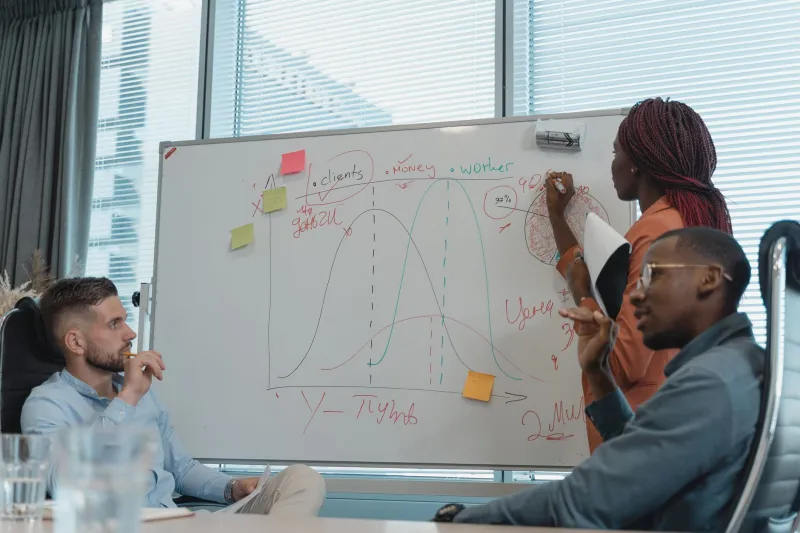
Every project starts with energy. There's a vision, a deadline, maybe a mood board and a Slack channel. And then, somewhere between kickoff and launch, things get messy. Deadlines slip. Revisions spiral. The original idea gets watered down by committee feedback until nobody's really sure what they're building anymore.
We've been there. We've also figured out how to prevent it.
At RTA Projects, we've refined a 7-stage framework that we apply to everything — brand identities, web builds, digital campaigns, product launches. It's not a rigid assembly line. It's a flexible structure that keeps creative work moving forward with intention. Here's what it looks like, and more importantly, where most teams go wrong.
Stage 1: Discovery — Actually Listen Before You Build
This one sounds obvious, but it's where the most expensive mistakes get made. Discovery isn't just filling out a creative brief. It's deep-listening: understanding the client's business model, their audience, their competitors, and — critically — the gap between what they think they need and what will actually move the needle.
We use structured discovery sessions, competitive audits, and stakeholder interviews before a single wireframe or concept gets touched. The deliverable here isn't a deck. It's clarity.
Common pitfall: Rushing discovery to get to "the fun stuff." Every hour skipped here costs two hours in revisions later.
Checkpoint: Can you articulate the project's core objective in one sentence? If not, you're not done with discovery.
Stage 2: Strategy — Turn Insights Into a Roadmap
Once you know what you're solving for, you need a plan for how to solve it. This is where positioning, messaging architecture, and project scope come together. It's also where we align on KPIs — what does success actually look like, and how are we measuring it?
For web projects, this stage includes information architecture and user journey mapping. For brand work, it's defining the brand's voice, values, and visual direction before anyone opens Figma.
Common pitfall: Skipping strategy and jumping straight to execution. You end up with beautiful work that doesn't actually connect with the intended audience.
Checkpoint: Does every planned deliverable tie back to a defined business goal? If you can't answer yes, cut it or reframe it.
Stage 3: Concepting — Explore Widely Before You Narrow
This is the creative sandbox stage, and it should feel a little uncomfortable. Good concepting means exploring directions that might not work — because that's how you find the one that really does. We typically develop two to three distinct creative directions before presenting anything to a client.
The goal isn't to show options for the sake of options. It's to stress-test the strategy and find where the creative idea and the business need intersect most powerfully.
Common pitfall: Falling in love with the first idea. The first idea is rarely the best one — it's just the most comfortable.
Checkpoint: Have you explored at least one direction that felt risky or unexpected? If every concept feels safe, you haven't pushed far enough.
Stage 4: Design & Development — Build With the End in Mind
Here's where execution kicks in, and where process discipline matters most. Design and development should run in close parallel, not in isolated silos. A design that can't be built efficiently is a liability. Code that ignores the design intent produces something that looks nothing like what was approved.
We work in iterative sprints with regular check-ins rather than disappearing for weeks and reappearing with a finished product. Feedback loops are shorter, surprises are fewer, and the final output reflects what was actually agreed upon.
Common pitfall: Treating design handoff as a one-time event. Ongoing collaboration between designers and developers isn't a luxury — it's a quality control mechanism.
Checkpoint: Is the team building toward the approved concept, or are scope additions quietly sneaking in? Scope creep is real, and it starts here.
Stage 5: Review & Refinement — Feedback Is a Skill
Not all feedback is created equal. "I don't like it" is not feedback. "This doesn't communicate urgency to our target demographic" is feedback. Part of our job is helping clients give us the kind of input that actually improves the work rather than just changing it.
We structure our review cycles with clear parameters: what's being evaluated, what decisions need to be made, and what's off the table at this stage. This keeps revision rounds focused and prevents the dreaded "one more change" spiral.
Common pitfall: Opening every element up for feedback at every stage. Lock down what's been approved and move forward. Revisiting settled decisions kills momentum.
Checkpoint: Is each round of feedback moving toward resolution, or are you circling the same issues? If it's the latter, the problem is usually in the brief, not the design.
Stage 6: Pre-Launch — The Stage Nobody Wants to Spend Time On
QA testing, performance optimization, accessibility checks, content proofing, cross-browser testing, redirect mapping — none of this is glamorous, but all of it matters. Launches that skip this stage are the ones that generate panicked emails at 11pm.
For web projects specifically, this is also where we run load testing, check mobile responsiveness across real devices (not just browser emulators), and confirm that analytics and tracking are firing correctly. You can't optimize what you can't measure.
Common pitfall: Treating pre-launch as a checkbox rather than a dedicated phase. Budget real time for it — typically 10-15% of the overall project timeline.
Checkpoint: Has someone outside the core team tried to break it? Fresh eyes catch what familiarity misses.
Stage 7: Launch & Iteration — The Start of the Next Cycle
Here's the mindset shift that separates good agencies from great ones: launch isn't the finish line. It's the starting gun for the next phase of improvement. The best digital products are living things — they respond to user behavior, market shifts, and new data.
We build post-launch review sessions into every project. What performed as expected? What surprised us? What does the data say about user behavior in the first 30 days? These answers inform the roadmap for what comes next.
Common pitfall: Treating launch as closure. Clients who invest in ongoing iteration consistently outperform those who treat their website or brand as a one-and-done project.
Checkpoint: Is there a plan for the first 90 days post-launch? If not, make one before you go live.
The difference between a project that just gets done and one that actually delivers results isn't talent — it's structure. These seven stages aren't bureaucracy. They're the scaffolding that lets creativity do its best work. When every team member knows where they are in the process and what success looks like at each step, the whole thing moves faster, cleaner, and with a lot less stress.
That's what we're building toward at RTA Projects — not just deliverables, but outcomes.